
Casino KYC Verification: Which Documents Casinos Ask For and Why

Contents
- What Casino KYC Verification Actually Checks
- The Core Documents: Photo ID, Proof of Address, Payment Proof
- How to Complete Verification in One Attempt
- Why the Rules Are Strict, and Who Is Asking
- Source of Funds: When the Request Gets Bigger
- Common Mistakes That Get Documents Rejected
- Costs, Delays and When to Contact Support
- Verification as a Ranking Criterion
- Casino Verification FAQ
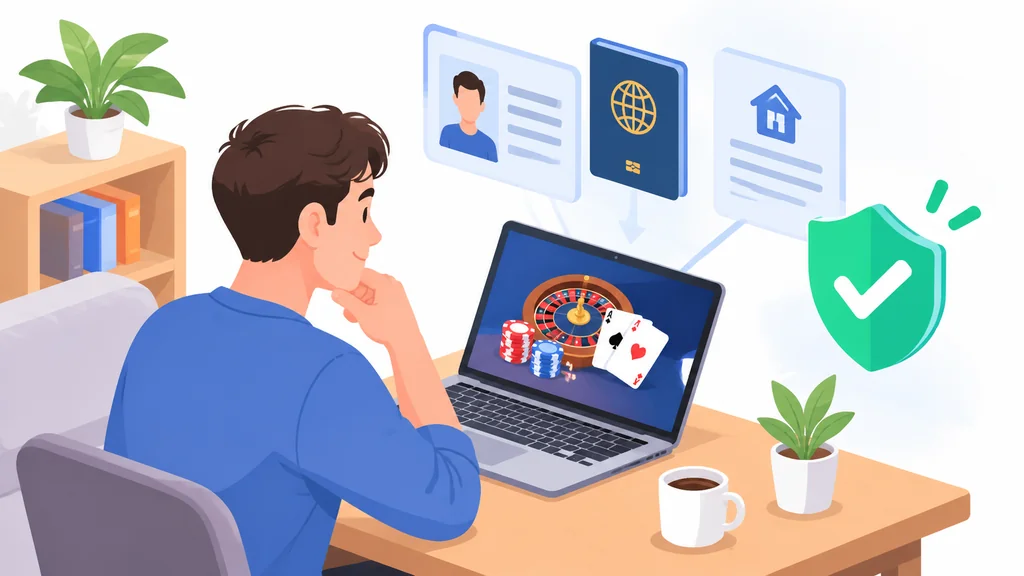
Casinos ask for identity documents because anti-money-laundering rules treat them as financial businesses. The request comes from those compliance obligations. The standard set is one photo ID, one recent proof of address, and a payment-method record tying your name to the deposit. Most accounts clear in a day when the name matches on every document.
What Casino KYC Verification Actually Checks
Customer due diligence, usually shortened to CDD, has one purpose at a licensed operator. It confirms that the person moving money through the account is who they say they are, lives where they claim, and is using funds they control.
That is why the request pattern feels repetitive. Each document answers a different question, and the casino cannot substitute one for another.
The checks break into four practical questions:
- Is this you? Photo ID with a name, date of birth and photograph.
- Where do you live? A dated document naming your address.
- Do you own the payment method? A statement or screenshot showing the same name on the account.
- Where did the money come from? Source-of-funds evidence for larger play.
European rules show how seriously the second question gets treated even outside gambling. The EU AML Directive applies customer due diligence to estate agents letting property only when the monthly rent amounts to EUR 10 000 or more, a threshold showing that the obligation scales with money moved. The amount moved determines the threshold. The same logic drives casino tiers.
The Core Documents: Photo ID, Proof of Address, Payment Proof
Almost every first request is the same trio. Knowing the format each one needs saves a rejected upload.
Photo ID. Passport, national identity card or driving licence. Casinos generally want the full document in frame, all four corners visible, no glare, and for licences often both sides. A photograph of a photocopy is a common rejection.
Proof of address. Usually a utility bill, bank statement or tax letter issued within the last few months. The name and address must match the account exactly, including apartment numbers and middle initials. Mobile phone bills are sometimes refused because they do not always print a service address.
Payment proof. A bank statement page or a screenshot inside the payment app showing your name beside the card or wallet reference. Casinos use this to match deposits to a verified identity.
A note on e-wallets. If you deposited through a wallet, expect a screenshot of the wallet profile, alongside the bank feed. Local rules on what qualifies vary, so check the label on the payment method page in the cashier.

How to Complete Verification in One Attempt
The procedure below avoids the two failure modes that cause most delays. They are mismatched names and unusable images.
- Open the casino’s verification page and read the list of accepted document types before photographing anything.
- Put the photo ID flat on a dark, plain surface in daylight and capture both sides if it is a driving licence.
- Take the proof of address as a colour image, straight on, with the issue date and your full address legible.
- Screenshot the payment method showing your name and the card or wallet reference that matches the deposit.
- Rename the files with your account name and the document type, then upload.
- Submit everything in one session rather than sending documents one at a time.
- Note the reference number or save the confirmation screen, then wait before sending duplicates.
A single complete submission is reviewed faster than a scattered one, and support staff can see a clean set at a glance.
Why the Rules Are Strict, and Who Is Asking
Licensed operators sit under national gambling regulators and anti-money-laundering supervisors in their own jurisdiction. The obligations are not a marketing choice, and a casino that skips them risks its licence.
The EU framework gives a good sense of how far the compliance thinking runs. The EU AML Directive exempts anonymous-use payment instruments from due diligence only where they carry a maximum monthly payment transactions limit of EUR 150, which is why anonymous vouchers sit outside mainstream deposit options. The same directive also permits identity verification using electronic identification means and trust services established under Regulation (EU) No 910/2014, so a passport scan read by a verification vendor is a recognised route in many countries.
For the player, this has one practical consequence. The same checks apply whether you play on desktop or through an installed app, and the app is often the smoother place to upload because the camera is better. Our comparison of the casino app versus the mobile browser experience covers that difference in detail.
Source of Funds: When the Request Gets Bigger
A second tier of questions appears once deposits or withdrawals reach a level the operator considers unusual for the account. Now the casino wants to know where the money comes from.
Expect to provide one or more of these:
- Payslips or an employment letter
- Bank statements covering several recent months
- A tax return or notice of assessment
- Evidence of a savings balance or a property sale
- A letter confirming a pension or benefit
The request is not an accusation. Regulators expect operators to understand the origin of funds above certain limits, which each jurisdiction sets and each casino applies through its own thresholds. If the sum is large, ask the support desk which single document would settle the review, and send that single document.
Common Mistakes That Get Documents Rejected
Rejections are usually technical, and they can cost several days.
- Cropped images. The document must sit fully inside the frame, with corners and edges visible.
- Glare and blur. Screens and phone flash ruin the machine-readable strip on a passport.
- Name mismatch. A married name, an abbreviation, or a missing middle name on the casino account will stall the review.
- Expired or near-expiry ID. Some operators refuse documents that expire within a few months of submission.
- Edited files. Cropping a screenshot is fine; painting over a balance is treated as a fraud marker.
- One document at a time. Sending the ID on Sunday and the bill on Wednesday restarts the review clock.
Costs, Delays and When to Contact Support
Verification itself is free at licensed operators. Nobody should charge for a KYC check, and any request for payment to unlock a withdrawal is a strong signal to stop.
Timing depends on the operator. Automated checks that read the document and match it against a database can clear within minutes. Manual review of a scanned utility bill or a source-of-funds pack can take days. Weekends and holidays slow the queue.
Contact support when a check has sat past the stated review window, when a document was rejected without a reason, or when the requested document cannot exist in your situation. A good operator will name an alternative. A vague refusal is worth pushing on.
One more habit helps. If you plan to use responsible-gambling tools, set them up early, because account changes and verification requests sometimes cross paths. Our walkthrough of casino self-exclusion and deposit limits explains the sequence. Bonus terms also interact with verification, since most offers require a completed account before withdrawal, as covered in the guide to sticky versus non-sticky casino bonuses.
Verification as a Ranking Criterion
In our directory work, KYC handling is one of the few criteria that separates casinos using the same platform. The quality of the process shows in three things. The document list should be published before you deposit, the review window should be stated in hours rather than “shortly”, and support should name a specific alternative when a document is refused.
Operators that handle those three well tend to handle everything else well. Several sites in our listings run identical software and differ mainly in how clearly they explain the paperwork, and that difference is what the comparison is for.
The practical advice is simple. Verify before you deposit, upload a clean set once, and keep a folder of current documents on your phone or computer. The folders that clear fastest are the boring ones kept up to date, and the players who breeze through a withdrawal request are the ones who did the upload months earlier.

Casino Verification FAQ
What documents does an online casino ask for first?
A photo ID, a recent proof of address such as a utility bill or bank statement, and evidence that the payment method belongs to the account holder. The identity document must be valid and in date, and the address on the account must match the bill.
How long does casino KYC verification take?
Automated checks can complete within minutes when the document is clear and the names match. Manual reviews of scanned bills or source-of-funds packs take days, and weekend submissions wait longer because fewer reviewers are working.
Why does the casino want a bank statement?
It matches the name on the payment method to the player and, in a source-of-funds review, shows where the money moving through the account comes from. Sending one statement page naming the card or wallet reference usually settles it.
Can I verify with an electronic ID?
Many European operators accept electronic identification and recognised trust services, which the EU AML Directive allows alongside scanned documents. Whether yours qualifies depends on the operator and your country, so check the payment page or ask support which route they accept.
Is it safe to send identity documents to a casino?
Licensed operators must protect player data under their jurisdiction’s privacy rules, and they have little commercial reason to misuse a passport scan. Send documents through the account’s own upload page. Email is less suitable for this purpose. Ask support to delete duplicates you accidentally sent.
Thank you for reading!
Login
Register