
Megaways Slot Machines


Contents
—
Megaways slots randomize the number of symbols on every reel with each spin, so the ways to win change constantly on top of a variable grid. A standard six-reel title can reach 117,649 ways when every reel lands seven symbols, and that count resets on every spin you play. Big Time Gaming created the mechanic, and it now powers titles across most major studios, from Pragmatic Play to Blueprint Gaming.
How Megaways Slots Work
Each reel shows a random number of symbols on every spin, replacing the fixed grid a traditional slot uses. That single change rewrites how wins are calculated.
On a standard Megaways layout, each of the six reels can display anywhere from two to seven symbols. The ways-to-win total comes from multiplying the symbol count on each reel together. When every reel lands its maximum of seven symbols, the math looks like this:
7 × 7 × 7 × 7 × 7 × 7 = 117,649 ways to win
This maximum figure is the commonly cited baseline for standard six-reel Megaways titles, and it only shows up when every reel hits its top symbol count. If one reel shows only three symbols, the total drops sharply. Lower reel counts produce dramatically fewer ways. The count moves with every spin, and that movement is the whole point of the mechanic.
The grid shifts on every spin, and nothing about the previous spin predicts the next. I ran a free demo of Extra Chilli and clocked the swing directly: one spin stacked seven symbols on every reel, the next dropped to three or four on half of them.
| Example Reel Layout | Ways to Win |
|---|---|
| 6-5-4-7-3-6 | 15,120 |
| 7-7-7-7-7-7 | 117,649 |
| 4-4-4-4-4-4 | 4,096 |
| 3-3-3-3-3-3 | 729 |
Two players on the same game can have completely different experiences within a handful of spins, and that’s by design.
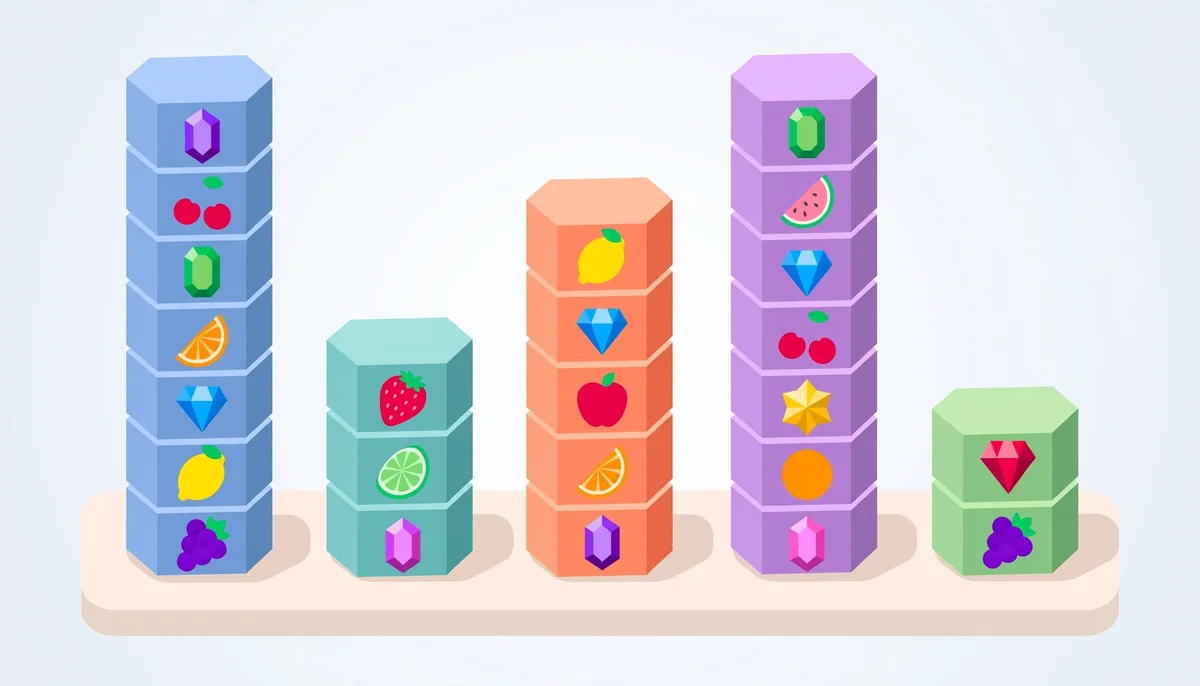
Some titles push past the standard ceiling. Wheel of Fortune Megaways can reach up to roughly 1,000,000 ways during its free-spins feature. Others use smaller grids that top out around 15,000 to 16,000 ways. So “Megaways” encompasses a family of variable-grid layouts, each with its own ceiling.
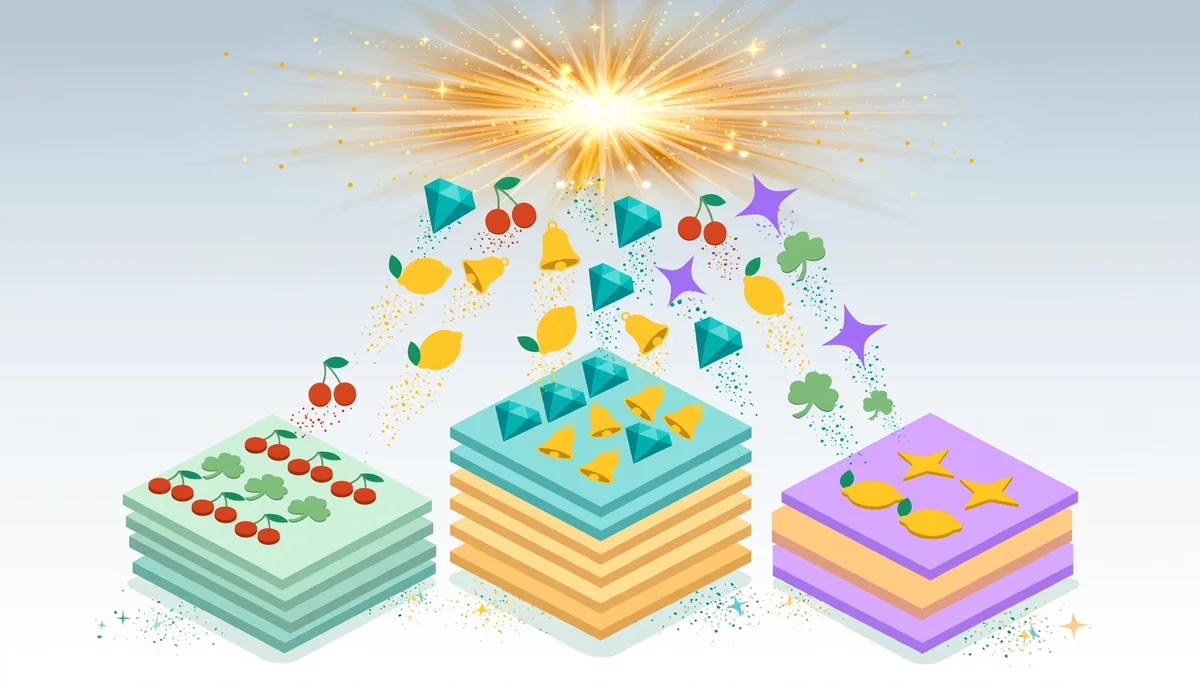
Cascading reels, also called tumbling reels, usually sit on top of this. When you land a win, the winning symbols vanish. The symbols above them drop down, and new symbols fill the gaps from the top. If that new arrangement wins again, the process repeats. All of this happens inside a single paid spin, so one spin can chain into several consecutive wins before it ends.
The cascading mechanic is what turns a single spin into a sequence, and it’s the feature most players actually notice.
Megaways vs. Traditional Slots
These four points separate the two systems.
| Feature | Megaways | Traditional Slots |
|---|---|---|
| Paylines / ways-to-win system | Variable ways, recalculated every spin | Fixed paylines, set in advance |
| Reel symbol count | 2–7 symbols per reel, changing each spin | Fixed symbols per reel |
| Win frequency pattern | More frequent small hits, driven by cascades | Steadier, tied to fixed line structure |
| Typical volatility | Medium to high | Ranges from low to high by title |
Megaways trades predictability for variety. You get more ways to win on some spins and fewer on others. The cascade system tends to produce a stream of smaller hits, with a rhythm that keeps shifting. If you prefer a slot whose behavior you can learn and predict, a fixed-payline title will feel more consistent. If you want the grid to shift under you, Megaways is the point.
On a fixed-payline slot, you can look at the paytable and know exactly which symbol combinations pay and how often they can appear. On Megaways, that same calculation changes with every spin, because the number of possible winning combinations is different each time. That makes the game harder to “learn” in the traditional sense. You can’t memorize a pattern that holds. What you can do instead is check the volatility rating and the RTP before you play, since those two numbers tell you more about the experience than the grid ever will.
You can browse popular slot machines by category to see how both styles sit next to each other, the slot casino landscape overall for more context, and low-stake penny slots if you want to test the mechanic without much at stake.
Where Megaways Came From
Big Time Gaming invented Megaways. The Australian studio was founded in 2011 by Nick Robinson and Hugh McIntosh, and the mechanic is its signature creation.
The first Megaways slot was Dragon Born, released by Big Time Gaming in early 2016. This is confirmed directly by Big Time Gaming’s own release announcement, so it isn’t a matter of debate. Bonanza came later the same year and is the title that made Megaways globally popular. Bonanza achieved popularity while Dragon Born achieved the distinction of being first.
Dragon Born is “the world’s first MEGAWAYS™ slot” — Big Time Gaming, official release announcement
A lot of sites online still describe Bonanza as arriving in 2015 and credit it as the original.
That’s wrong on both counts. Dragon Born came first that release year, and Bonanza followed later. If you’ve read elsewhere that Bonanza launched the mechanic, you’ve read a version of the history that skipped the actual first release.
The distinction matters because it shows the order events actually happened in. Big Time Gaming released Dragon Born first, then Bonanza the same year, then began licensing the mechanic to other studios.
When you see a Megaways title from a different studio, you’re looking at a licensed version of the same underlying system Big Time Gaming introduced on Dragon Born. The timing affects licensing history more than it affects how any single game plays today.
Multipliers and Bonus Features
Most Megaways titles pair cascading reels with an unlimited win multiplier during free spins. Each consecutive cascade in the chain adds to the multiplier, and there’s no fixed ceiling on how high it can climb.
The word “unlimited” is doing real work here. In a standard free-spins round, a multiplier might cap at 5x or 10x. In many Megaways titles, it doesn’t cap at all. Every cascade that follows a win pushes the multiplier higher, so a long chain can stack into a large figure. This design rewards the rare long cascade.
This isn’t universal. Whether a title uses an unlimited multiplier, a capped one, or none at all depends on that game’s math model. Two Megaways slots can share the same grid and cascade system and still handle multipliers completely differently. Always check the paytable of the specific title to see how the feature works, since it varies across games.
The multiplier is also where the volatility really lives. A game with an unlimited multiplier and a long cascade chain can produce a much larger single payout than a game with a capped one, but those chains are rare by design. You get bigger potential spikes but also longer dry spells in between. If you prefer steadier sessions, a capped multiplier or a lower-volatility Megaways title will suit you better. If you’re chasing the rare long chain, the unlimited version is built for exactly that. General slot strategy principles, like betting limits, session timing, and paytable study, apply equally to Megaways and fixed-grid slots, and the same practical tricks for slot play carry over too.
In that same demo session, a three-cascade chain during free spins pushed the multiplier up with each successive win, the kind of climb the free-spins round is built to produce.
Is Megaways Fair? RTP and Volatility
Megaways titles average around 96% RTP, with individual games commonly landing somewhere in the 94–97% range. Volatility runs medium to high, because the ways-to-win count and the multipliers both shift every spin.
RTP is set per game, not by the Megaways mechanic itself. Two titles using the same grid can carry different return figures, because the studio tunes each one separately. Megaways doesn’t raise or lower the house edge. No slot mechanic does. The house edge is built into the math model of each individual game; the mechanic shapes how wins are distributed across spins, while the underlying house edge remains constant.
That’s why comparing RTP across titles matters more than comparing mechanics. If you want the highest-return options, our guide to the highest RTP casino slot machines breaks down where the numbers actually sit. And since this is gambling, approach it as entertainment with a cost, and set a limit before you play, then stop when you hit it. Players must be 18 or over.
The numbers tell you the expected return; your session limit tells you the boundary.
Who Makes Megaways Games
Big Time Gaming licenses the mechanic to many other studios. Pragmatic Play, Blueprint Gaming, Red Tiger Gaming, iSoftBet, and Reel Time Gaming all build Megaways titles under license.
That licensing model explains why the mechanic shows up everywhere. A studio doesn’t have to invent its own variable-reel system. It licenses Megaways, then wraps its own art, theme, and math model around it. The result is a large catalog where the underlying grid is often identical and only the presentation changes.

For players, licensing cuts both ways. On one hand, it means you can find a Megaways title in almost any theme you like, from fruit slots to adventure games; you can browse the full slot catalog to see the range. On the other, it means the Megaways label alone tells you nothing about quality. A licensed game can turn out tightly designed or generic, and the license doesn’t change that. What the license guarantees is the core mechanic. Variable reels, cascading wins, and the ways-to-win math define the format, while everything else, volatility, bonus design, artwork, depends on the individual studio.
Bonanza and Extra Chilli from Big Time Gaming, The Dog House Megaways from Pragmatic Play, and Temple Tumble Megaways from Relax Gaming show the range of what studios can do with the same licensed format. The differences between them come down to theme, art, and each studio’s own bonus design, not the underlying mechanic.
The studio name on a Megaways title offers limited insight into how a game plays. Two games from different studios can play almost identically, and two from the same studio can diverge sharply. Focus on the paytable and volatility of each individual title when making your choice.
The license guarantees the mechanic; the studio tunes everything else.
FAQ
What does Megaways mean? It describes a slot design where each reel shows a random number of symbols on every spin, replacing the fixed grid and set paylines of a traditional machine. The ways-to-win total is recalculated each time you spin.
How many ways to win can a Megaways slot have? On a standard six-reel game, the maximum comes when all six reels show seven symbols, the total you get by multiplying seven across six reels. Some titles go higher during bonus features, and others use smaller grids with lower maximums.
Who invented Megaways? Big Time Gaming, the studio founded in 2011 by Nick Robinson and Hugh McIntosh. The first Megaways release was Dragon Born in early 2016, with Bonanza following later that release year.
Are Megaways slots better than regular slots? They play differently. Megaways offers more ways to win and a shifting grid, but volatility tends to run medium to high. Fixed-payline slots suit players who want steadier, more predictable behavior.
Do all Megaways games have the same RTP? No. Each title carries its own published figure. Megaways titles average around 96%, but individual games commonly range from 94% to 97%.
Can I play Megaways for free in demo mode? Demo versions are common across major studios and casinos, letting you test the mechanic without staking real money. Availability varies by operator and region.
Thank you for reading!
Login
Register